
In mine countermeasure (MCM) operations, locating a potential mine is only the beginning. Understanding what lies beneath the surface is equally important.
Effective mine countermeasures require more than detection. They require the ability to visually inspect, identify and classify underwater objects so that operators can make informed decisions about how to proceed.
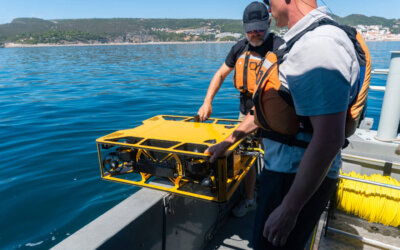
During REPMUS, the joint solution combining the CGuard ROV and Voyis Discovery Stereo Perception Series demonstrated the value of this approach, identifying 26 mines through underwater optical imaging.
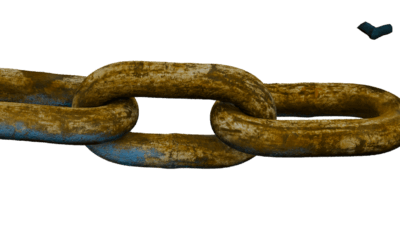
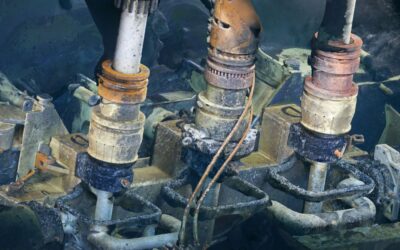
Among the classifications represented were Rockan, Manta, MK49, MK36 and MK55/52 mines. The results highlight an important part of the mine countermeasure process: moving beyond locating underwater objects towards obtaining the visual information needed to assess and identify them.
Why identification matters
Not all underwater mines are the same. Their design, physical characteristics and potential threats can vary considerably.
Being able to distinguish between mine types is therefore an important part of mine countermeasure operations.
Identification provides operators with additional information to support threat assessment and decision-making. Rather than treating every detected object as an unknown, teams can use visual evidence to better understand what they are dealing with.
This has direct implications for operational efficiency.
1. Better-informed neutralization decisions
Understanding a mine helps specialists assess the object and determine an appropriate course of action. Better visual information supports decisions that are based on what has actually been observed, rather than assumptions.
2. More efficient mission planning
Reliable visual identification can help teams prioritize objects, assess findings and allocate resources accordingly. This contributes to a more informed workflow, particularly when multiple potential threats are present.
3. Reduced uncertainty and unnecessary intervention
The ability to visually inspect and classify objects can help distinguish mines from other underwater objects and provide greater confidence in assessment. This is valuable in reducing uncertainty before further intervention is considered.
Ultimately, identification helps bridge the gap between detection and informed action.
The role of underwater optical imaging
Achieving reliable visual identification underwater presents its own challenges. Visibility, operating depth, lighting conditions and the need to capture sufficient detail all influence the quality of the information available to operators.
This is where underwater optical imaging plays an important role.
The Discovery Stereo Perception Series provides high-resolution stereo imaging and real-time depth information, enabling operators to observe underwater objects with greater visual context.
By combining optical imaging with the manoeuvrability of an ROV, operators can capture detailed visual data of potential mine threats without relying solely on acoustic detection.
The resulting imagery and 3D data provide additional information to support object identification and re-acquire.
From detection to informed action
In mine countermeasure operations, efficiency is not simply about finding objects faster. It is also about reducing uncertainty, improving identification and ensuring that subsequent decisions are informed by reliable information.
The combination of the CGuard ROV and the Discovery Stereo Perception Series demonstrates how underwater optical imaging can contribute to this process.
Because effective mine countermeasures begin with knowing what you are looking at.
Discover how Voyis underwater optical imaging supports mine countermeasure operations.