
Voyis partnered with CGUARD at REPMUS 2026 to support localization and identification tasks for Mine Countermeasure (MCM) operations, demonstrating how advanced underwater optical imaging can improve situational awareness and provide accurate, georeferenced 3D models in complex subsea environments.
Combining sonar and optical imaging for MCM operations
The demonstration used a Yellow Tail ROV with six degrees of freedom, equipped with side-scan sonar, a Discovery Stereo Perception Series Camera, and a Sonardyne SPRINT-Nav Mini INS/DVL.
The Discovery Stereo Perception Series provided wide-angle live video and dense point clouds, enabling operators to interpret subsea scenes, identify targets, and reconstruct their surroundings in 3D. Stereo imagery also supported photogrammetry for general 3D estimation, while Voyis VSLAM, powered by EIVA NaviSuite, enabled real-time 3D reconstruction and coverage mapping.
With up to 125,000 lumens of light output, the imaging system provided detailed visual information to support target identification and spatial understanding throughout the mission.
Key results from REPMUS
The demonstration delivered measurable results across target detection, identification, and geospatial accuracy:
- 26 mines identified during the demonstration.
- Less than 0.4 m average geolocation error.
- 2 minutes average time to locate a mine using side-scan sonar.
- 4 minutes average time from sonar localization to visual inspection of a target.
- 2 minutes average time to generate a VSLAM a mine.
- 2 hours and 30 minutes average mission duration.
The ROV was deployed from the vessel in an average of two minutes, supporting an efficient workflow from deployment through target localization and identification.
Improving identification confidence with optical imaging
A key outcome was the complementary role of sonar and optical imaging in the MCM workflow. Side-scan sonar enabled rapid target localization, while optical imaging provided the visual detail needed to distinguish mines from non-mine objects (NOMBOs).
Across the Box A and Box S identification tasks, eight MILCOs were assigned. The results highlighted the value of visual inspection in refining target identification: side-scan sonar detection accuracy was 25% in Box S and 0% in Box A, while camera imagery enabled operators to assess individual targets more closely.
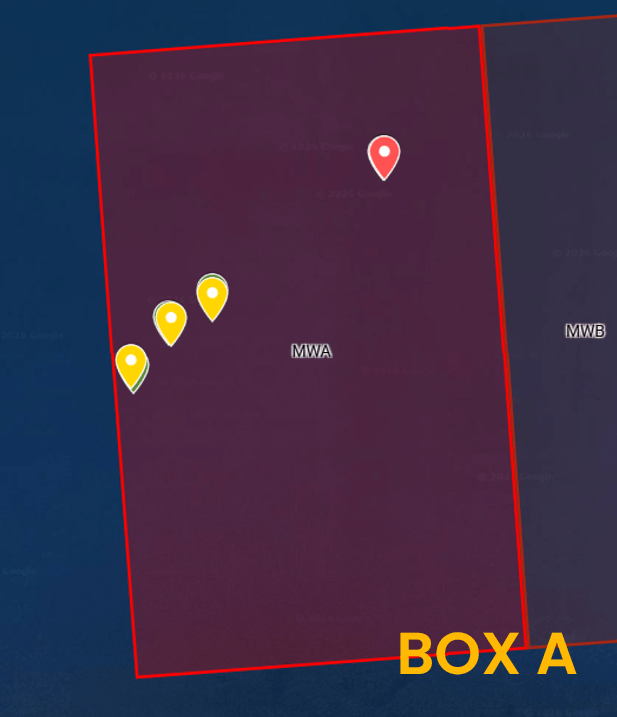
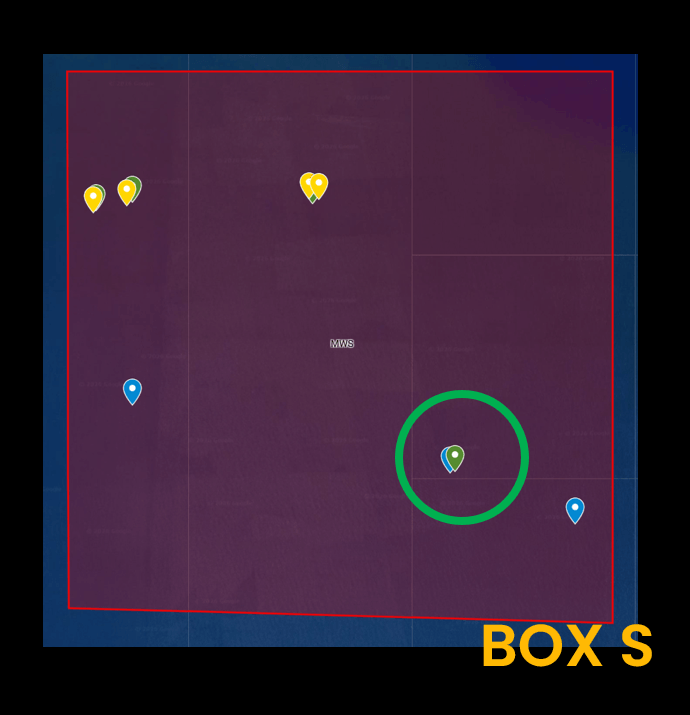
These results reinforce that sonar and optical imaging are complementary technologies. Sonar is highly effective for searching and locating potential targets, while optical imaging adds the detailed visual evidence needed to support identification and classification.
Accurate 3D reconstruction for subsea operations
Beyond target identification, the demonstration produced scaled, georeferenced 3D models of the subsea environment. Voyis VSLAM Powered by EIVA NaviSuite, supported real-time reconstruction and coverage mapping, providing spatial context for target locations and mission review.
By combining optical imaging, inertial navigation, sonar, and real-time 3D reconstruction on an ROV platform, the REPMUS demonstration showed how integrated sensing technologies can support more informed and accurate MCM operations.
Watch the video to see how Voyis optical imaging supported target identification and 3D reconstruction at REPMUS 2026.